24/7 Emergency Service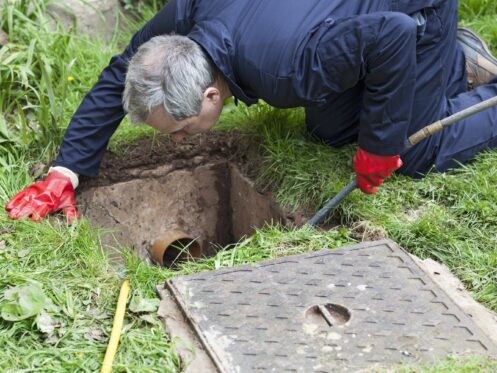
A failing sewer line can quickly shift from a minor inconvenience to a serious household problem. Slow drains, recurring backups, and unpleasant odors often signal an issue below ground, even when nothing is visible at the surface. When this happens, homeowners are usually faced with a key decision: will a repair resolve the issue, or is a full sewer line replacement the better option? At MVP Air Conditioning, Heating, Plumbing & Electric in Kansas City, MO, we help homeowners navigate this decision with clear inspections, honest recommendations, and solutions that fit both the home and the budget.
How Plumbers Identify Sewer Line Problems
When repeat clogs or persistent slow drains appear, the issue may extend beyond a simple blockage. The sewer line is a complex system, and multiple problems can exist at once. A plumber typically begins by asking questions about what you are experiencing indoors. Multiple slow drains, gurgling toilets, or sewage odors near floor drains often indicate a problem in the main sewer line rather than a single fixture.
Camera inspection is the most reliable diagnostic tool for sewer lines. A specialized camera travels through the pipe and transmits real-time video. This allows the plumber to identify cracks, root intrusion, corrosion, buildup, bellies, or sections of pipe that have shifted. The camera also provides location and depth data, which is essential for determining whether repair or replacement is the most practical solution.
When Sewer Line Repair Is the Right Choice
Sewer line repair is often appropriate when damage is isolated and the remaining pipe is structurally sound. For instance, a single cracked joint, a localized root intrusion, or a short section damaged by shifting soil may be resolved with a targeted repair. In these cases, technicians excavate only the affected area, replace the damaged section, and reconnect it to solid pipe on both sides.
Repair can also be effective when the pipe material is relatively modern, properly sized, and free from widespread deterioration. When most of the line appears smooth and intact on camera, a localized fix can restore proper flow and extend the system’s lifespan. Your plumber should also discuss risk factors such as nearby trees or soil conditions so you understand the potential for future issues.
Indicators That Replacement May Be Necessary
In some situations, repeated repairs become less effective and more costly over time. If camera footage reveals multiple cracks, severe corrosion, frequent root intrusion, or long sections of pipe that hold standing waste, replacement becomes the more reliable option. A sagging section of pipe, commonly called a belly, prevents proper drainage and often leads to recurring clogs even after cleaning.
Older pipe materials such as clay, Orangeburg, or heavily corroded cast iron tend to deteriorate throughout the line rather than in one isolated spot. When defects appear repeatedly along the pipe and the walls show significant wear, replacing the entire line provides a longer-term solution. Replacement may also be recommended if the existing line is undersized for the number of fixtures in the home, as upsizing during installation improves overall drainage performance.
Comparing Cost, Disruption, and Long-Term Value
Cost is a major factor in deciding between sewer line repair and replacement. Repairs typically involve lower upfront costs, especially when only a small section of pipe needs to be accessed. However, the remaining line continues to age, which can lead to future issues.
Replacement usually requires a larger investment and may involve more planning, particularly if landscaping, driveways, or patios are affected. In return, homeowners receive a new sewer line with smoother interiors, fewer joints, and materials designed to last decades. Many homeowners find that replacement reduces the likelihood of emergency service calls and provides peace of mind during periods of heavy water use.
Repair and Replacement Methods Explained
The method used depends on pipe condition, location, and property layout. Repairs typically involve a focused excavation directly above the damaged section. Crews remove the faulty portion, install new pipe, test for leaks, and restore the area once work is complete. Replacement may be performed using traditional trenching or trenchless techniques.
Traditional replacement exposes the full length of the sewer line, allowing for complete removal and rebuilding. Trenchless options, such as pipe bursting or lining, reduce surface disruption but are not suitable for every situation. A qualified contractor should explain which methods apply to your home, how long the work will take, and how plumbing use will be managed during the project.
How Trees, Soil, and Pipe Age Influence the Decision
Environmental factors play a significant role in sewer line longevity. Older neighborhoods often have mature trees whose roots seek moisture and enter pipes through small openings. If inspections reveal widespread root intrusion in aging pipe materials, replacement with modern, sealed piping often provides better long-term reliability.
Soil conditions also affect sewer lines. Expansive, shifting, or saturated soil can stress pipes and cause cracks or sagging. Pipe age compounds these issues, as older materials are less flexible and more prone to failure. Evaluating how these factors interact helps determine whether a repair will hold or if replacement is the wiser investment.
Making the Right Choice for Your Home
Sewer line issues do not have to result in repeated emergencies. A thorough inspection and clear explanation of your options provide a path forward. In some cases, a targeted repair resolves the issue efficiently. In others, replacement offers lasting reliability and fewer disruptions.
At MVP Air Conditioning, Heating, Plumbing & Electric, we provide sewer line inspections, camera diagnostics, targeted repairs, and full replacements, along with related drain services. If recurring clogs or backups are affecting your home, contact MVP Air Conditioning, Heating, Plumbing & Electric in Kansas City today to schedule a sewer line evaluation and move toward a permanent solution.

 Business Hours
 Quicklinks